

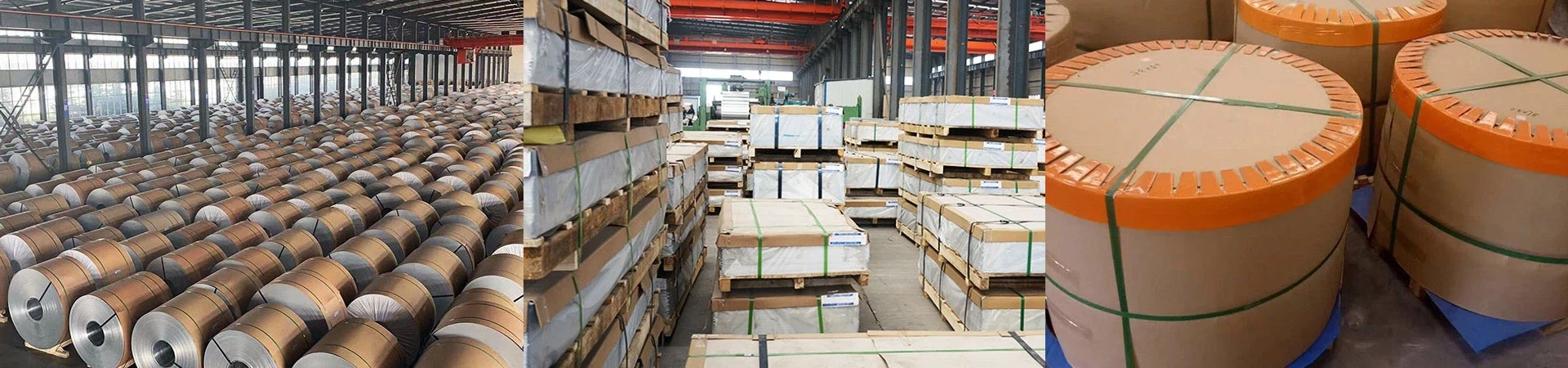
As an ideal material for vertical aluminum silos, 5052 H112 aluminum plate is first reflected in its excellent corrosion resistance. 5052 aluminum plate contains 2.2-2.8% magnesium and 0.15-0.35% chromium, which can form a dense oxide film on the surface, effectively resisting the chemical erosion generated during the storage of materials such as grain and chemical raw materials. It is particularly suitable for humid or corrosive environments, and can significantly extend the service life of silos by 3-5 times compared to carbon steel materials. In addition, the tensile strength of 5052 aluminum plate can reach 170-305MPa, and the yield strength is >=65MPa, which can meet the structural strength requirements of vertical aluminum silos.
In the h112 state, 5052 aluminum plate can also maintain excellent plasticity, which is convenient for processing into various silo shapes.
In terms of processing performance, 5052 H112 aluminum plate shows outstanding advantages.
5052 aluminum alloy can be cold processed and can be easily formed by stamping, bending and other processes; 5052 aluminum plate also has excellent weldability. When using ER5356 welding rod, the weld strength of 5052 h112 welding plate can reach more than 90% of the parent material, which is particularly suitable for the manufacture of aluminum silo structures that require a lot of welding. When building aluminum silos, using ultra-wide specifications (such as 2500mm width) of aluminum plates can reduce 30-50% of the welding workload, which not only improves production efficiency, but also reduces potential quality risks caused by welding.
The lightweight characteristics of 5052 H112 aluminum plate bring significant advantages to vertical silos. Compared with stainless steel silos, aluminum silos are about 60% lighter, which greatly reduces transportation and installation costs. They are particularly suitable for projects that require long-distance transportation or on-site assembly. This feature also reduces the requirements for the foundation of the silo, saving 15-20% of the infrastructure cost.
In terms of hygiene and maintenance, the surface of 5052 H112 aluminum plate is smooth and flat, not easy to adhere to material residues, easy to clean, and meets the strict hygiene standards of grain, food and other industries. At the same time, 5052 H112 anodized aluminum plate has strong weather resistance and does not require regular anti-corrosion treatment like carbon steel. The maintenance cost can be reduced by more than 70% and the surface performance is more stable, without color difference, while maintaining beauty and further improving corrosion resistance.
From a cost perspective, the price of 5052 H112 aluminum plate is between carbon steel and 304 stainless steel, but after taking into account the service life and maintenance costs, the 10-year total cost of an aluminum silo is generally 40% lower than stainless steel and 25% lower than carbon steel.
| 5052 H112 Aluminum Plate | 304 Stainless Steel | Q235 Carbon Steel | |
|---|---|---|---|
| 20–23 | 35–40 | 6–8 | |
| 20–25 | 25–30 | 8–12 | |
| 5–8 | 3–5 | 20–30 | |
| 15–18 | 20–25 | 2–3 | |
| 10-Year Total Cost Coefficient | 1.0 | 1.4 | 1.25 |
In actual engineering applications, 5052 H112 aluminum plates have been successfully used in a variety of vertical silo projects. A large grain silo project used GNEE 5052 H112 aluminum plates to build a vertical aluminum silo. After 5 years of use, the inspection showed that there was no sign of corrosion on the silo wall, the sealing performance was intact, and the grain storage loss rate was less than 0.5%, which was much better than the 2-3% of carbon steel. In the chemical industry, 5052 H112 aluminum silos used to store fertilizer raw materials show excellent chemical corrosion resistance, especially in environments containing chloride ions, and their performance is significantly better than 304 stainless steel.


In terms of structural design, silos made of 5052 H112 aluminum plates usually adopt the following optimization scheme:
The wall thickness of the aluminum silo is determined according to the characteristics and height of the stored material, and the ring reinforcement rib design is used on its outside to make up for the low elastic modulus of aluminum.
A special sealing welding process is used at the connection to ensure airtightness, and the surface of the 5052 h112 aluminum plate can be anodized to enhance weather resistance.
5052 H112 aluminum plate performs well in extreme environments. In marine climate areas, its salt spray corrosion resistance is more than 10 times that of carbon steel; its mechanical properties are stable in the temperature range of -20℃ to 60℃, suitable for various climate conditions. For materials that are prone to condensation, the surface of the aluminum plate will not rust like carbon steel, avoiding material contamination.


